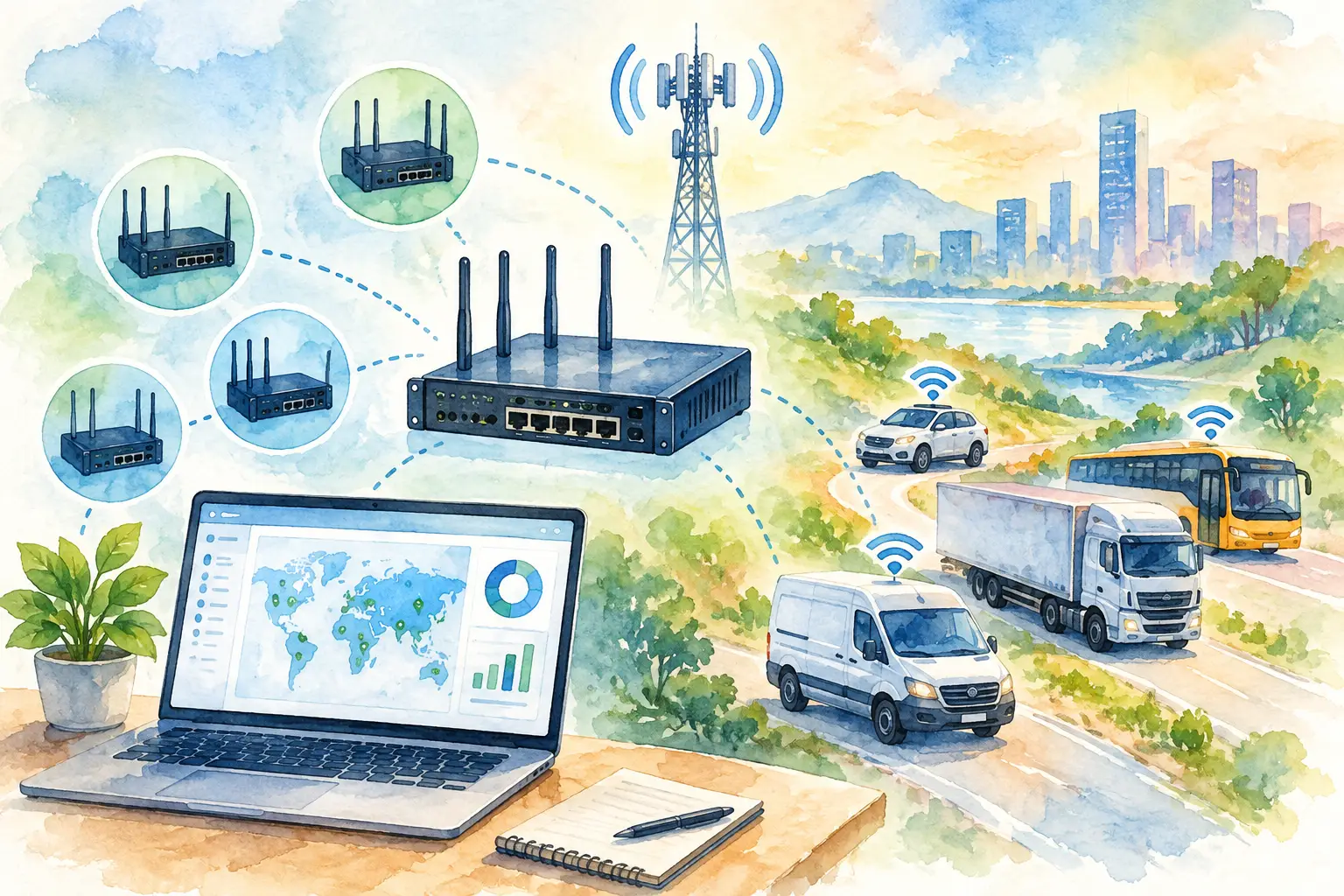
A gateway fleet can look healthy until a route starts returning short calls, a handset loses registration, or a prepaid balance reaches its limit during a busy period. GSM gateway fleet monitoring turns those isolated events into visible operational signals. For teams running authorized mobile-to-SIP connectivity across multiple sites, the objective is not simply to see whether a device is online. It is to understand whether each device, SIM, SIP trunk, and route is contributing usable capacity.
That distinction matters at scale. A device can appear connected while its radio conditions have degraded, its SIP registration is stale, or its calls are failing at a higher rate than the rest of the fleet. A monitoring system must connect physical device status with call outcomes, routing behavior, and commercial controls. Otherwise, the NOC is left with a collection of green indicators and no clear explanation for declining performance.
What GSM Gateway Fleet Monitoring Must Show
Effective monitoring starts with a fleet view that lets an operator move from a regional problem to a single endpoint without switching between unrelated tools. The top-level screen should answer immediate operational questions: How many gateways are available? Which devices are active on calls? Which SIMs have low balance? Which locations are experiencing elevated failures? Which SIP trunks are registered and carrying traffic?
A useful device record goes further than online or offline status. It should identify the assigned location, device model, connection method, current signal condition, battery or power state where applicable, selected mobile operator, SIM status, and recent activity. This context is what makes an alert actionable. “Device offline” is less useful than knowing whether the device was connected by USB, Bluetooth, or a Smart Bridge, when it was last seen, and whether other devices at the same site remain available.
For distributed deployments, grouping matters. Operations teams should be able to review devices by city, site, customer profile, operator, gateway group, or route assignment. A localized outage requires a different response from a single failing handset, and monitoring should make that difference obvious.
Device Availability Is Only the First Layer
Availability is necessary, but it is not a quality metric. A gateway may be reachable by the control plane while unable to place or receive useful calls. Monitoring should therefore distinguish between device connectivity, mobile network readiness, SIP registration status, and call activity.
This layered view helps isolate faults quickly. If the phone is online but the associated SIP trunk is unregistered, the issue likely sits in credentials, network reachability, or trunk configuration. If the trunk is registered but calls are failing only on one mobile operator, the investigation moves toward SIM status, signal conditions, operator-side service state, or route policy. If calls connect but audio quality drops, the team needs call-level evidence rather than another device ping.
Monitor Calls as a Route Performance Signal
The call screen is where fleet monitoring becomes an operations discipline rather than inventory management. Live call visibility should show active sessions, direction, source and destination context, gateway assignment, trunk, start time, duration, and current state. For incident response, this provides a direct answer to whether traffic is flowing and where it is flowing.
Historical call detail records add the evidence needed for trend analysis. CDRs should allow teams to inspect attempt time, answer time, duration, disposition, release reason, assigned device, SIM, route, and relevant billing information. When a customer reports failed calls, the operator should not need to reconstruct an event from handset logs and separate PBX records.
At the route level, ASR and ACD remain valuable indicators, but they require context. A falling ASR can point to poor reachability, an unavailable resource pool, incorrect routing, or a change in traffic mix. A short ACD can indicate answer-and-release behavior, capacity pressure, or a route that is technically connecting but operationally underperforming. Neither metric should be treated as a verdict on its own.
Compare route metrics across time windows, locations, operators, and gateway groups. If a route declines across the entire fleet, investigate the trunk, dial plan, or upstream environment. If only one group is affected, the cause is more likely local. This is the practical value of centralized monitoring: it narrows the fault domain before engineers begin manual testing.
Treat SIMs as Managed Operational Resources
A SIM is not just an inserted card. In a production fleet, it is an assigned resource with an operator, balance, usage profile, status, location, and relationship to a specific device or route. Monitoring must expose that relationship clearly.
Balance controls are especially important for prepaid operations. A route can appear unavailable because the underlying SIM cannot complete chargeable activity, not because the gateway has failed. Low-balance alerts let the team address the condition before it becomes a customer-impacting outage. Usage reporting also supports planning by showing which SIMs and locations carry meaningful traffic over time.
SIM status should be read alongside device and call information. A SIM with normal signal but no completed calls may indicate a routing or registration issue. A SIM associated with repeated failures may need investigation, but the correct response depends on the evidence. The goal is accurate diagnosis, not automated assumptions.
Alerts Should Reduce Noise, Not Create More of It
An alert is useful only when it identifies a condition that needs action and reaches the person who can act on it. Fleet monitoring commonly needs alerts for device offline events, loss of SIP registration, low prepaid balance, failed-call patterns, signal deterioration, and connection loss between the managed phone and its gateway interface.
Thresholds need operational tuning. A single short registration interruption may not justify an escalation if the platform recovers automatically. Repeated re-registration, however, can indicate a network condition that will become visible in call performance. Similarly, one failed attempt is normal in many voice environments; a sustained increase against a route baseline deserves attention.
Alert design should account for maintenance windows, site conditions, and service priority. A device assigned to standby capacity should not generate the same urgency as one carrying a high-volume route. Grouped alerts are also preferable to dozens of identical notifications when a site loses its local internet connection.
Build a NOC Workflow Around Evidence
The strongest monitoring setup supports a repeatable workflow. Start with the fleet overview to determine scope. Review current device, SIM, and trunk state. Then use recent calls and CDRs to identify whether the problem is connectivity, registration, routing, mobile access, or call quality.
For example, a rise in failed calls from one city should lead an operator to compare affected gateways with the rest of the fleet. Are those devices all attached to the same operator? Are signal readings lower? Did they lose SIP registration at the same time? Is the failure cause consistent in CDRs? This sequence is faster and more reliable than rebooting devices or changing routes without evidence.
The same approach supports capacity planning. Review concurrent call activity, available devices, busy periods, and route-level answer behavior before adding endpoints. Capacity is not merely the number of phones in inventory. It is the number of endpoints that are registered, adequately connected, funded where required, and producing acceptable call results.
Centralized Control Changes the Cost of Scale
Traditional gateway deployments often create separate management tasks for hardware, cabling, SIM inventory, SIP configuration, and reporting. As sites multiply, those tasks become harder to reconcile. A cloud-managed platform reduces that operational separation by bringing device status, connections, routes, profiles, billing controls, and call records into one workspace.
GSMCalls applies this model to managed mobile devices using USB Connect, Wireless Connect, or Smart Bridge connectivity. The deployment method should remain visible in monitoring because each architecture has different physical dependencies and troubleshooting paths. A cable issue, a Bluetooth pairing issue, and a network reachability issue should not present as the same generic device failure.
Centralization does not eliminate the need for local procedures. Sites still need stable power, internet access, correctly configured devices, and documented ownership. What it changes is the speed at which a central team can identify exceptions, verify recovery, and maintain consistent routing policy across locations.
Measure What the Fleet Can Actually Deliver
The most useful monitoring dashboard is not the one with the most widgets. It is the one that shows whether the fleet can deliver expected call capacity with acceptable quality right now, and why it cannot when conditions change.
Keep device telemetry, SIM controls, SIP status, route metrics, and CDR evidence in the same operational conversation. When a problem appears, the next action should come from observable facts. That is how a distributed mobile gateway fleet stays manageable as locations, devices, and traffic volumes grow.